
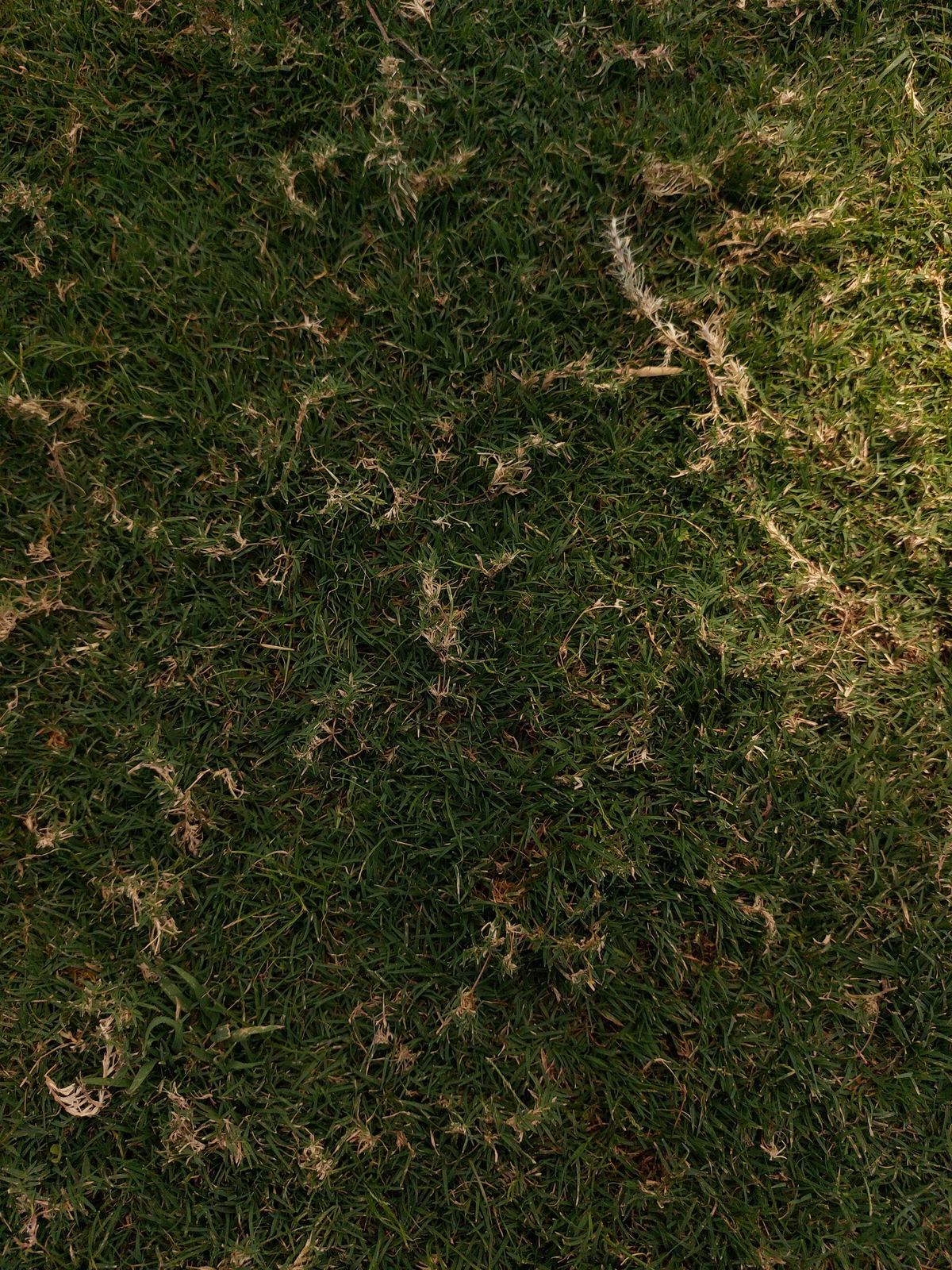
If you’ve got St. Augustine grass in Central Texas, chinch bugs are the single most common insect problem you’ll run into — and they’re one of the few lawn issues that genuinely gets worse the more you water, which trips a lot of people up.
What Chinch Bug Damage Looks Like
Yellow patches that expand outward over days and weeks, almost always starting in the hottest, sunniest, driest part of the yard — think the strip next to a driveway, a south-facing wall, or a sidewalk that radiates heat. The grass looks exactly like it’s drought-stressed. The giveaway: watering it more doesn’t fix it, and can even make it spread faster, since chinch bugs thrive in hot, dry conditions and the extra moisture doesn’t touch the actual cause.
Left untreated, the yellow patches turn brown and die outright, and the damage keeps expanding outward from the original spot.
What the Bug Actually Looks Like
Adult chinch bugs are small — about 1/5 inch, roughly the size of a BB — black-bodied with white, irregular markings on their wings. Nymphs (young chinch bugs) are smaller, reddish, and wingless. They cluster at the base of grass blades, right at the thatch layer, where they’re easy to miss with a casual glance.
How to Confirm It: The Float Test
Don’t guess — confirm it in under five minutes:
- Cut both ends off a large coffee can or similar cylinder.
- Push it a couple of inches into the soil at the edge of a yellowing patch (not the dead center — that’s often already bug-free since they’ve moved on to feed on the healthy edge).
- Fill it with water.
- Watch the surface for 5–10 minutes. Chinch bugs trapped inside will float up.
If you see several bugs, you’ve confirmed the diagnosis and can treat with confidence instead of guessing.
How They Cause Damage
Chinch bugs feed at the base of the grass blade and inject a toxin as they feed, which is what actually kills the tissue — it’s a toxin problem, not primarily a “sucking the plant dry” problem, which is why extra water doesn’t help.
Treatment
- Apply an insecticide labeled for chinch bugs. Bifenthrin and permethrin are both common, effective active ingredients available in homeowner formulations.
- Treat the damaged area plus a buffer a few feet beyond the visible yellowing — chinch bugs are usually already feeding at the healthy edge before damage becomes visible there.
- Reapply on the label’s schedule. Central Texas summers are long enough for chinch bugs to produce multiple generations in a single season (roughly June through September), so a single treatment often isn’t enough if conditions stay hot and dry.
- Water normally, not more. Keep to your regular established-lawn schedule — don’t overcorrect with extra water thinking it’s a drought issue.
Prevention
- Keep the lawn properly fed — stressed, underfed St. Augustine is more vulnerable. See our MicroLife fertilizer guide.
- Avoid excessive thatch buildup, which gives chinch bugs cover.
- Check known hot spots (driveway edges, south-facing walls) early each summer if you’ve had chinch bugs before — they tend to recur in the same spots year over year.
For a rundown of chinch bugs alongside the other most common Austin lawn issues, see our guide to common Austin lawn problems.
Chinch Bugs vs. Drought Stress vs. Disease
| Chinch Bugs | Drought Stress | Brown Patch | |
|---|---|---|---|
| Shape | Expanding patch from a hot edge | Even, whole-lawn dulling | Circular, 1-3 ft |
| Responds to water? | No — can worsen | Yes, recovers | No |
| Season | June–September | Any dry period | Fall & spring |
| Confirm with | Float test | Soil moisture check | Blade-pull test |
Still Not Sure?
Send us a photo or call (936) 510-0964 — we can usually help confirm chinch bugs over the phone based on the pattern and timing. If the damage is extensive enough to need repair sod, get a quote.