
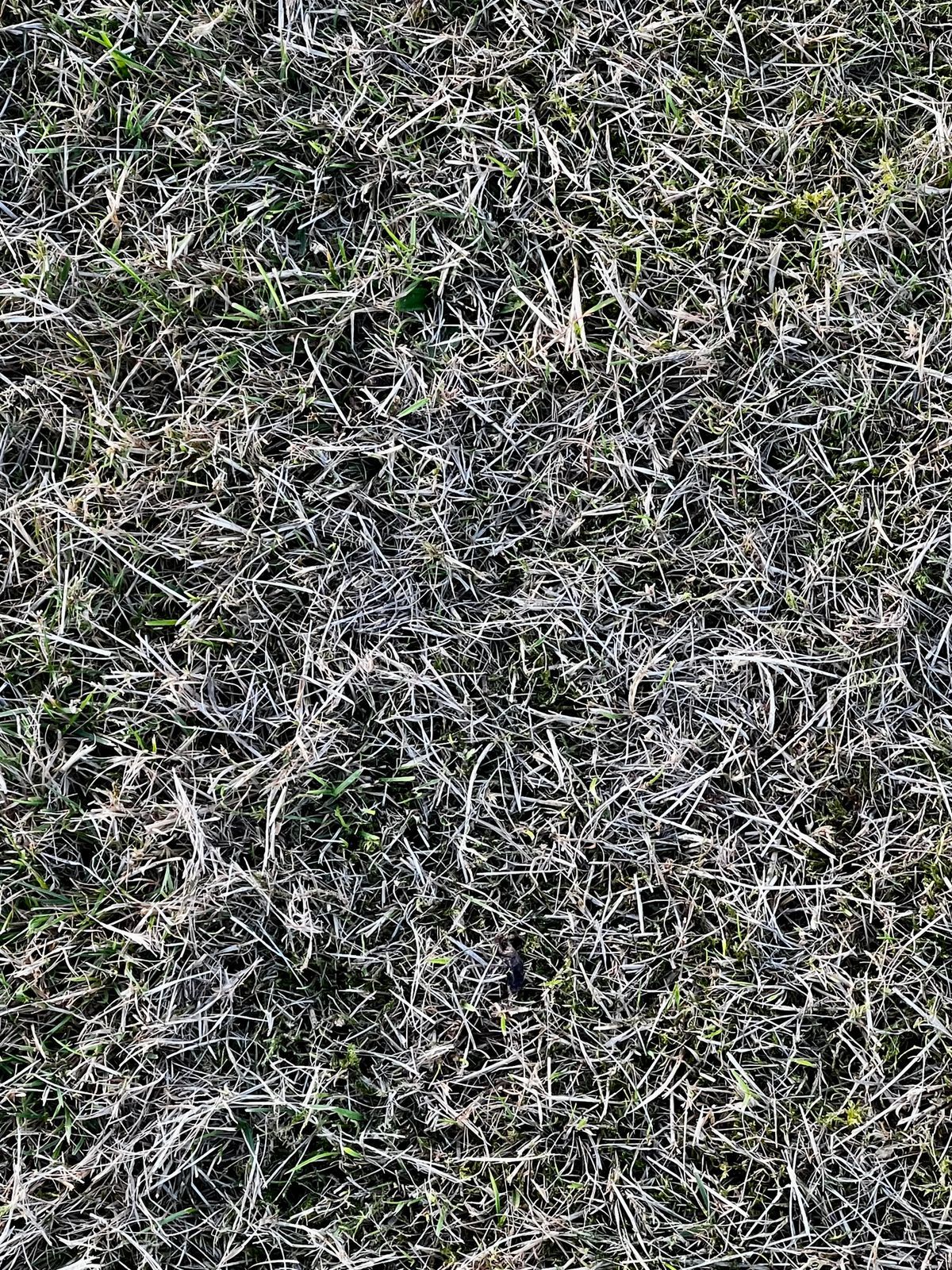
Of all the lawn diseases we cover, take-all root rot is the one most often misdiagnosed — because for weeks, it just looks like the lawn needs fertilizer. By the time most people realize it’s not a feeding problem, the disease has had a real head start.
What It Looks Like Above Ground
Gradual, irregular yellowing that spreads slowly over weeks rather than the sudden circular patches of brown patch. It’s easy to mistake for underfeeding, iron deficiency, or a watering issue — see our Grass Turning Yellow guide for how those other causes usually present. The tell that it’s not one of those: fertilizing doesn’t fix it, and in fact heavy nitrogen can make it worse.
The Real Giveaway Is Underground
Pull up a piece of affected sod and look at the roots. Healthy St. Augustine roots are white to light tan and firm. Take-all-affected roots are short, dark brown to black, and rotted — they’ll often crumble or pull apart easily instead of holding together. This root damage is what actually causes the yellowing you see above ground: the plant can’t take up water and nutrients through damaged roots, regardless of how much you feed or water it.
Why It Happens
Take-all root rot is caused by a soil-borne fungus (Gaeumannomyces graminis) that’s present in most soils at low levels but only becomes a real problem when the lawn is stressed. Common stressors in Central Texas:
- Drought stress followed by heavy rain or overwatering
- Compacted or poorly-drained soil — common in Blackland clay areas
- High soil pH — the same alkaline limestone conditions that cause iron deficiency also favor this fungus
- Excessive thatch or poor soil biology
Spring and fall are the most common onset periods, when temperature swings add extra stress to the lawn.
Treatment: This One Takes Patience
There’s no fast fix for take-all root rot — treatment is about reducing stress and rebuilding root health over a full season, not a single application:
- Stop overwatering and overfertilizing immediately, especially nitrogen — both add stress rather than relieving it.
- Improve drainage where you can; standing water or compacted soil makes this worse.
- Topdress with peat moss or quality compost over the affected area — this helps buffer soil pH and improve the root environment.
- Apply MicroLife Brown Patch 5-1-3 preventively — while it’s formulated primarily for brown patch and large patch, its microbial disease-fighting activity has some benefit against take-all as well, and it doubles as a mild, safe fertilizer that won’t add unnecessary stress.
- Be patient. Recovery happens as new roots grow in below the damaged zone, which takes a full growing season in many cases — don’t expect a two-week turnaround like you might with an insect problem.
Prevention
- Keep soil pH in check — MicroLife Acidifier helps manage the alkaline conditions that favor this fungus in the first place, while also fixing the iron-deficiency yellowing that’s common in the same soil (see our Acidifier breakdown).
- Avoid the drought-then-overwater cycle — consistent, appropriate watering is more protective than reactive overcorrection.
- Address compacted soil with aeration — see Lawn Aeration: Why and When.
Take-All Root Rot vs. Nutrient Deficiency vs. Brown Patch
| Take-All Root Rot | Iron/Nitrogen Deficiency | Brown Patch | |
|---|---|---|---|
| Speed | Slow, weeks | Slow, weeks | Fast, days |
| Pattern | Irregular, spreading | Uniform | Circular patches |
| Roots | Black, rotted | Normal | Normal |
| Responds to fertilizer? | No, can worsen | Yes | No |
Think You Have This?
Pull a sample and check the roots before you spend money on more fertilizer — if you’re not sure what you’re looking at, call (936) 510-0964 and describe what you see, or send a photo. If a section needs to be replaced outright after recovery efforts stall, get a quote for fresh sod.