
Most lawn problems give you time to figure out a plan. Armyworms don’t. This is the one pest on our list where “wait and see” is genuinely the wrong call — a healthy-looking Bermuda lawn can be visibly stripped within two to three days once a wave moves through.
What Armyworm Damage Looks Like
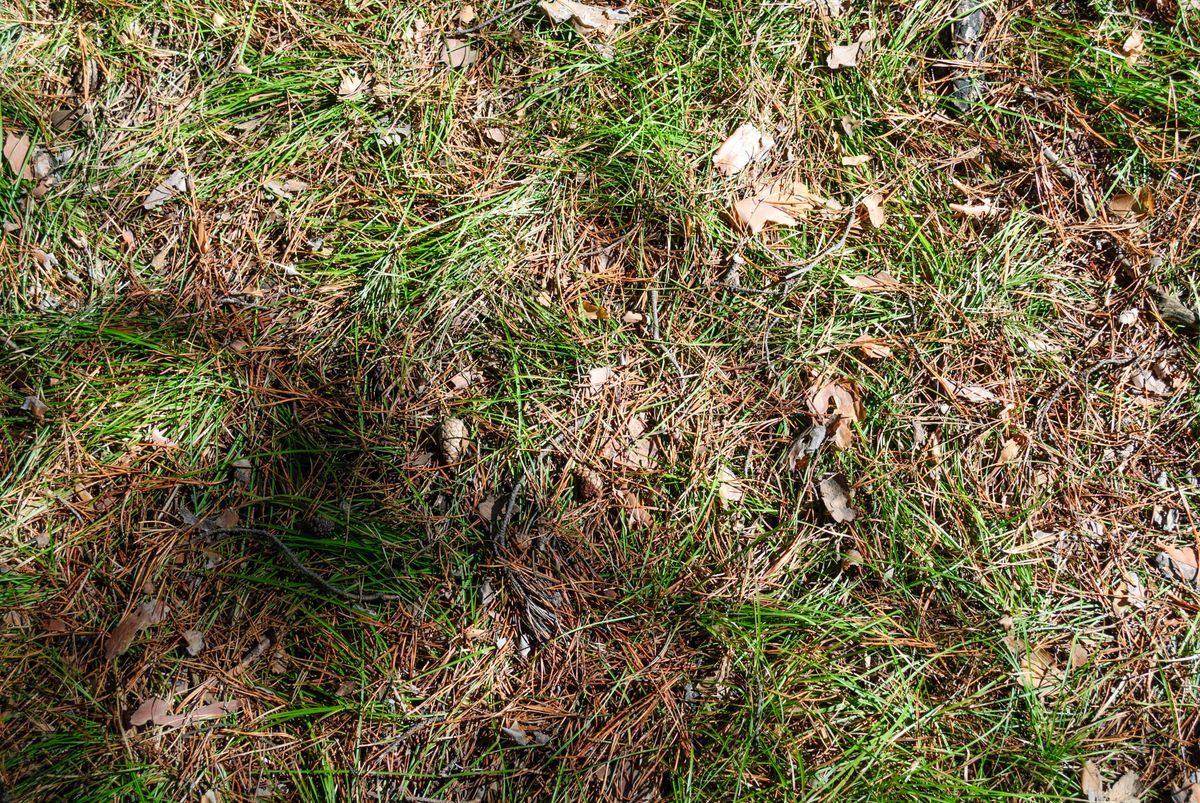
Grass blades chewed down close to the crown, leaving a ragged, thin, brown-tinged look rather than a clean cut. Damage often starts at the edges of the lawn or near taller grass/weeds along a fence line and spreads inward. In bad infestations, you’ll see visibly bare or severely thinned patches within a couple of days where the lawn looked completely normal before.
When to Watch For Them
Fall armyworms are the main concern in Central Texas, typically August through October, though outbreaks can happen anytime conditions are right. They move in waves carried by weather patterns, which is why an area can go from zero problem to a full-blown outbreak with little warning — a moth flight brings in a new generation, eggs hatch, and the caterpillars feed aggressively for a short, intense window before pupating.
How to Confirm It
- Look closely at the grass blades themselves for ragged, chewed edges rather than the tan/brown discoloration typical of disease or drought.
- Check early morning or evening — armyworms feed most actively at dawn/dusk and hide lower in the thatch during the heat of the day.
- A soap-flush test works like the chinch bug float test: mix a tablespoon of dish soap into a gallon of water, pour it over a suspect patch, and watch for caterpillars surfacing within a few minutes.
- Birds behaving unusually interested in your lawn (grackles, starlings pecking aggressively at the grass) can be an early tip-off — they’re feeding on the caterpillars before you’ve spotted the damage yourself.
Treatment — Act Immediately
Unlike most lawn problems, armyworms reward speed:
- Treat as soon as you confirm them, even if visible damage is still minor. Waiting a few days can mean the difference between spot treatment and a full lawn resod.
- Use an insecticide labeled for armyworms/caterpillars — options containing spinosad, bifenthrin, or permethrin are commonly available and effective.
- Water the lawn lightly before treating in the evening, then apply — this helps drive the caterpillars up out of the thatch where the treatment can reach them.
- Recheck in a week. A single wave usually clears with one well-timed treatment, but if you’re in a heavy outbreak year, a second wave can follow.
Recovery
Bermuda and Zoysia are both fast-growing, resilient grasses (see their growth ratings in our grass-type guides) and typically bounce back from armyworm damage within a few weeks once the caterpillars are dealt with, as long as the crowns weren’t killed outright. Keep the lawn on a normal watering and fertilizing schedule during recovery — don’t overcorrect with extra nitrogen, which won’t speed regrowth and can invite other problems.
Armyworms vs. Other Fast-Moving Damage
| Armyworms | Chinch Bugs | Drought Stress | |
|---|---|---|---|
| Speed of damage | 48–72 hours | Days to weeks | Gradual |
| Grass affected | Bermuda, Zoysia | St. Augustine | Any |
| Season | Aug–Oct | June–Sept | Anytime, dry conditions |
| Blade appearance | Ragged, chewed | Yellowed, not chewed | Curled, dulled |
If You See This, Don’t Wait
Call (936) 510-0964 the same day you notice chewed, thinning grass in late summer or fall — this is the one lawn problem where a day or two genuinely changes the outcome. If the damage is already extensive, get a quote for repair sod once the caterpillars are dealt with.