
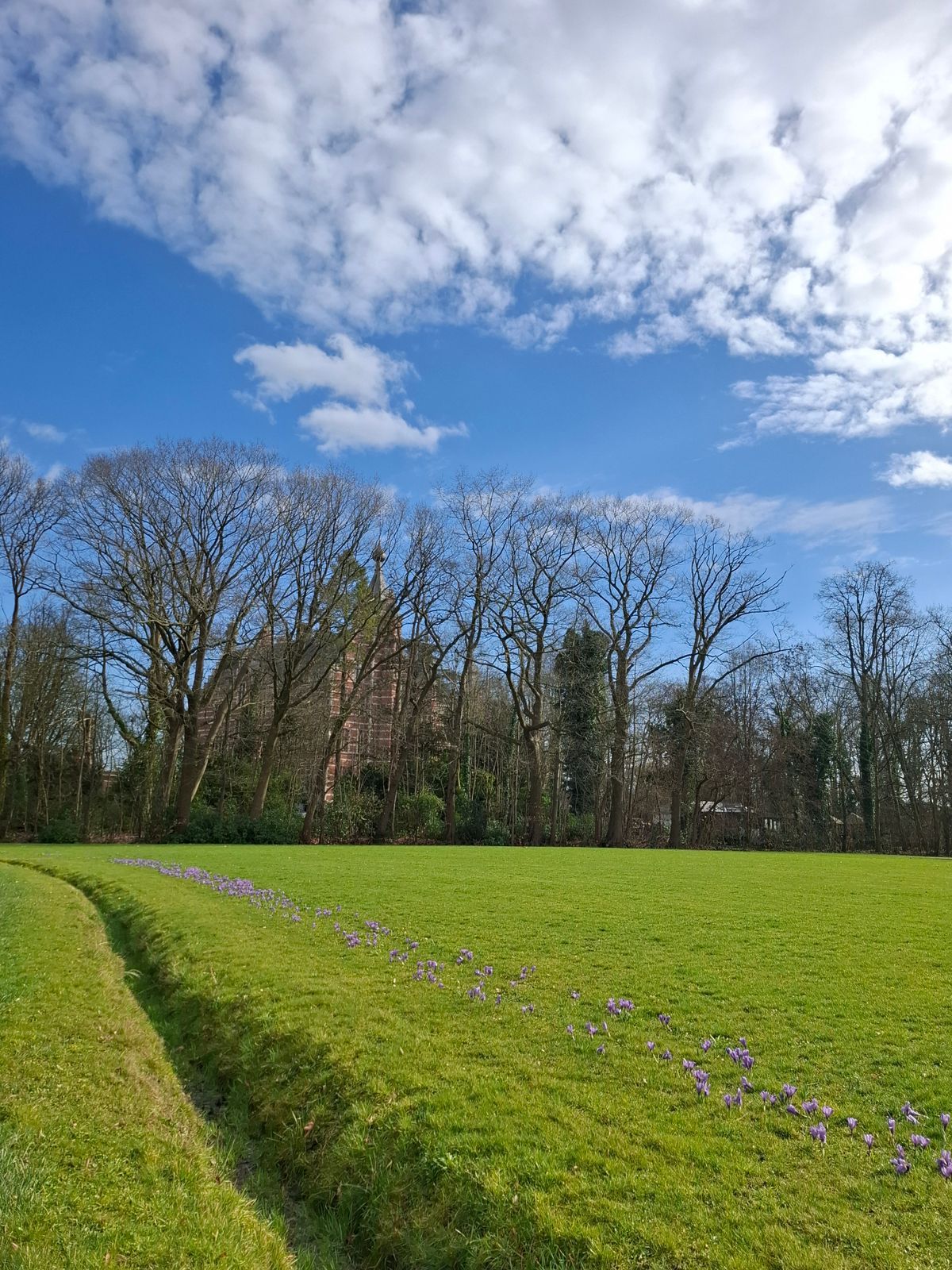
Every spring we get calls from homeowners convinced their lawn died over the winter. Almost always, it didn’t — it’s just still dormant, and different grasses wake up on very different schedules. Here’s how to tell the difference before you panic and resod something that was going to green up fine on its own.
The Tug Test
This is the fastest way to check: grab a handful of the brown grass and pull, firmly but not violently.
- If it resists and roots hold — the plant is alive. It’s dormant, not dead, and will green up on its own schedule.
- If it pulls up easily with no resistance, no white/tan roots attached — that’s a stronger sign of actual winter kill or a dead section, and it’s worth a closer look or a call.
Do this test in a few different spots, not just one — a single test in the wrong spot (like directly over a compacted path or a genuinely dead patch) can give you a misleading answer.
Normal Dormancy Timeline
All warm-season grasses (everything we sell — St. Augustine, Bermuda, and Zoysia) go dormant and brown out in winter. That’s completely normal and not a sign of disease or death. What trips people up is that they don’t all green back up at the same time:
- Bermuda (Celebration, Tifway 419, TifTuf): Usually the first to show green, typically March–April depending on how warm the spring is.
- St. Augustine (Raleigh, Palmetto, Amerishade): Similar timing to Bermuda, slightly later in cooler years.
- Zoysia (Palisades, Emerald, Zeon, Stadium): The slowest to green up of everything we carry, sometimes not fully green until well into April or even May in a cool spring. If your neighbor’s Bermuda is green in March and your Zoysia lawn still looks brown, that is completely normal — don’t panic, and definitely don’t fertilize early trying to force it (see below).
Palisades and Zeon Zoysia in particular have shown the best cold tolerance of the varieties we carry, including surviving the hard 2021 Texas freeze — so slow green-up in these varieties is a patience issue, not a health issue.
When It Might Actually Be Winter Kill
A genuinely hard freeze, especially an unusually severe one, can kill turfgrass outright rather than just triggering normal dormancy — this is uncommon but not impossible in Central Texas. Signs it might be real winter kill rather than slow dormancy:
- The tug test shows no root resistance at all.
- The affected area is isolated rather than lawn-wide (a low spot where cold air pooled, an area with thin snow/ice cover longer than the rest of the yard).
- It’s late in the season (May or later) and the spot in question genuinely hasn’t shown any green at all while identical grass elsewhere on the property has.
What NOT to Do
Don’t fertilize dormant grass trying to force early green-up. Fertilizing before the grass is actively growing wastes the product, can feed weeds instead, and doesn’t speed up dormancy break — the plant breaks dormancy on its own internal temperature cues, not on nutrient availability. Wait until you see genuine active growth (not just slight color change) before the first spring fertilizer application, per our Lawn Care Guide fertilizing schedule.
Don’t overwater trying to “wake it up” either — dormant grass needs very little water, and overwatering a dormant lawn mostly just risks fungal problems once temperatures do warm up.
Still Brown When It Shouldn’t Be?
If you’ve done the tug test, waited past the normal window for your grass type, and it’s still not showing any life, call (936) 510-0964 and describe what you’re seeing — we can usually help figure out if it’s still just slow dormancy or something worth addressing. If sections do need replacing, get a quote for fresh sod once you’re past the last frost date.