
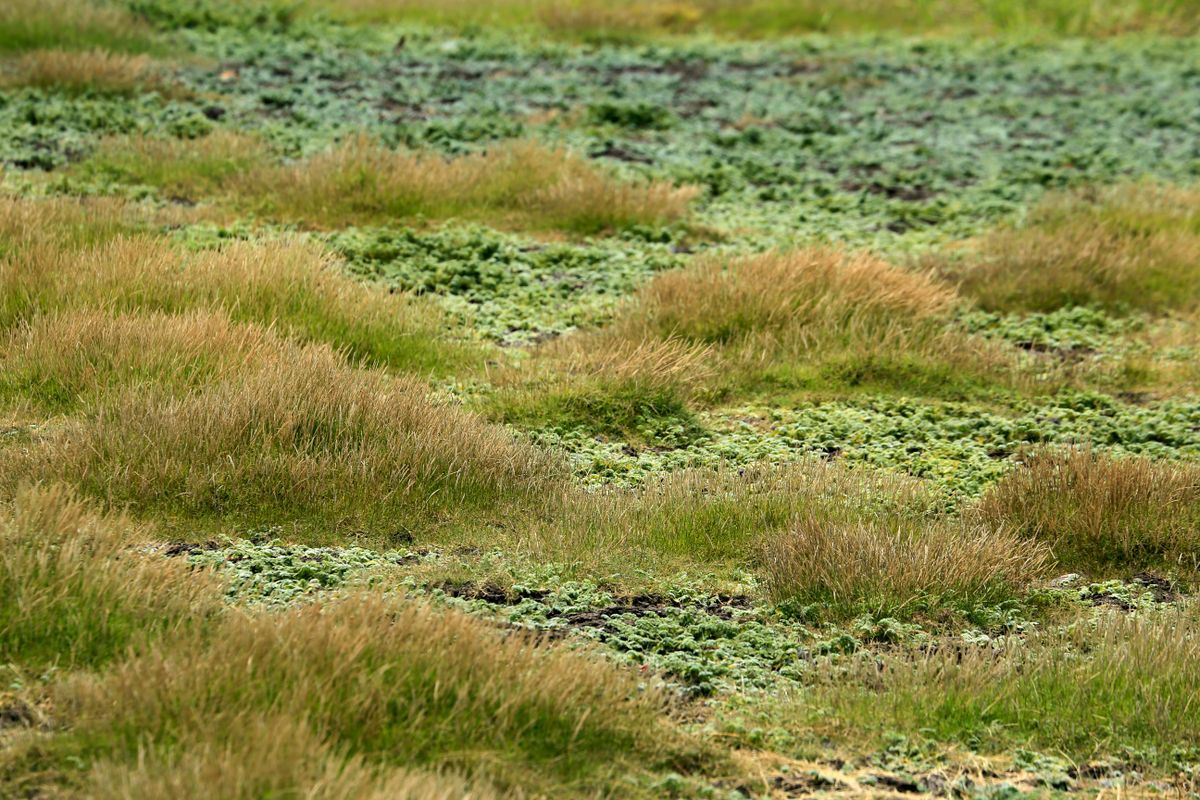
Thin or patchy grass is a different problem from yellowing — the grass isn’t just discolored, there’s visibly less of it, sometimes down to bare soil. The fix depends heavily on the cause, so start there.
Cause 1: Foot Traffic Wear
Where it shows up: Along the most-walked paths — side-yard gates, the line from the driveway to the front door, dog runs along the fence line.
Why: Every grass has a traffic tolerance, and repeated wear along the same path exceeds it faster than random foot traffic across the whole lawn. Check our grass comparison specs — Celebration Bermuda and Zeon Zoysia both handle heavy traffic well, while finer, showcase-type grasses thin out faster under repeat abuse.
Fix: For an established lawn, consider a stepping-stone path along the worn route to redirect traffic, or plug in sod pieces from an inconspicuous area. If you’re resodding anyway, choose a higher-traffic-tolerant variety for that zone.
Cause 2: Shade Thinning
Where it shows up: Under trees, on the north side of the house, anywhere sunlight is limited — with the thinning getting progressively worse as tree canopies fill in over the years.
Why: Every grass has a minimum sunlight requirement (see the specs table in each grass-type guide). St. Augustine varieties tolerate shade best of the grasses we carry, especially Amerishade, which is built specifically for deep shade zones — see Best Grass for Shade.
Fix: If the shade is getting worse over time, either switch that zone to a more shade-tolerant variety or consider that it may eventually need a non-grass ground cover or mulch bed instead — no grass thrives in truly deep, year-round shade.
Cause 3: Disease
Circular thinning patches usually mean brown patch, large patch, or take-all root rot rather than wear or shade. See Brown Patch and Large Patch and Take-All Root Rot if the pattern is patchy and roughly circular rather than following a traffic path or shade line.
Cause 4: Poor or Rocky Soil
Where it shows up: Scattered thin spots with no clear pattern, often on newer construction lots or areas with shallow topsoil over Hill Country limestone/caliche.
Why: Central Texas soil ranges from heavy Blackland clay to thin, rocky, alkaline soil over limestone bedrock — neither is naturally great for turf without amendment. Roots that can’t establish deeply produce thin, stressed grass on the surface. See our full Soil Types Explained guide.
Fix: Topdress with enriched soil, work in MicroLife Humates Plus 0-0-4 to improve structure and root development, and consider aerating (see Lawn Aeration: Why and When) to relieve compaction before reseeding or resodding thin areas.
How to Actually Repair a Thin Area
- Diagnose first. Fixing the cause matters more than patching the symptom — a wear path will just thin again if you resod without addressing the traffic.
- Prep the spot. Remove dead material, loosen the top inch or two of soil, and work in compost or enriched topsoil if the soil is poor.
- Match the grass. Use the same variety as the surrounding lawn when possible — mixing grass types creates a visibly patchy look even after it fills in.
- Water like new sod. Whether you’re plugging in sod pieces or reseeding, follow the new-sod watering schedule in our Lawn Care Guide for the first several weeks.
- Keep foot traffic off the repaired area until it’s rooted — 3–4 weeks minimum.
When to Just Call Us
If more than 20-30% of the lawn is thin or bare, patching stops being cost-effective compared to a fresh resod of that section. Call (936) 510-0964 and we’ll help you figure out which way makes more sense, or get a quote for sod by the pallet.