
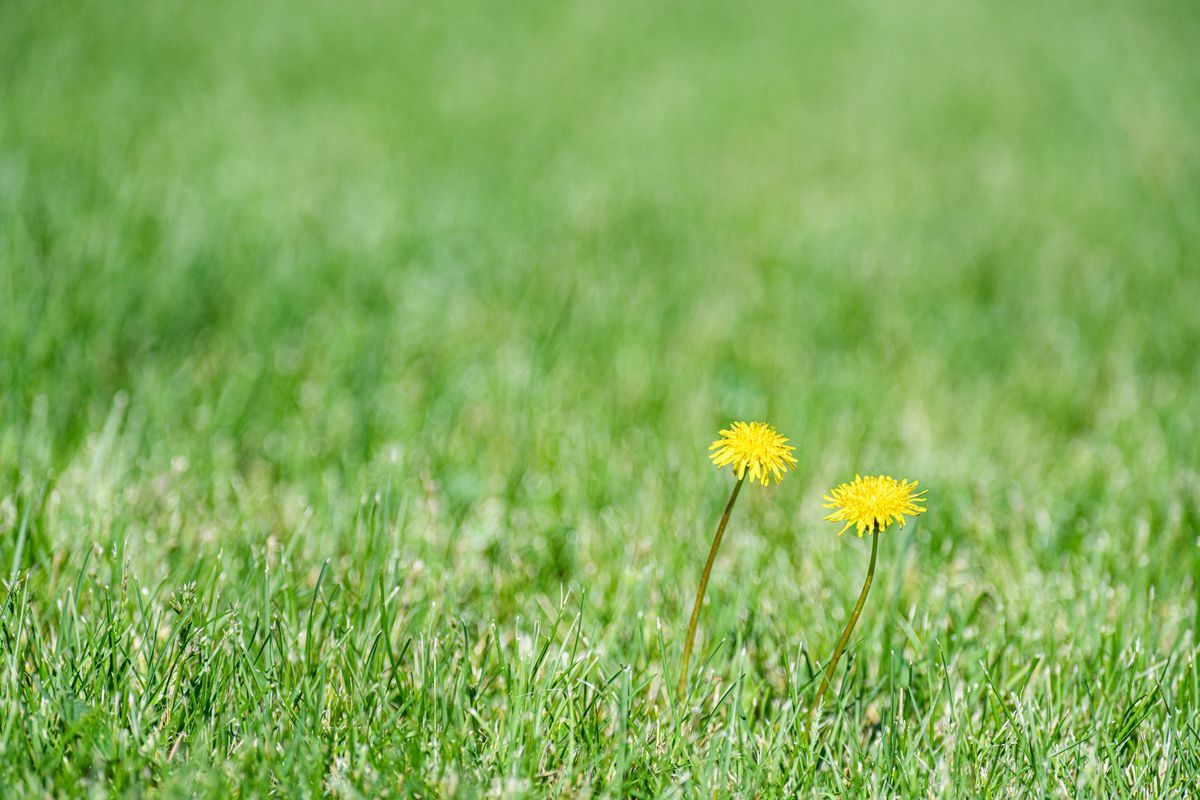
Seeing weeds pop up in brand-new sod is more common than most people expect — and the instinct to reach for a weed-and-feed product is exactly the wrong move in the first several weeks. Here’s why, and what actually works instead.
Why Weed-and-Feed Is Dangerous on New Sod
Weed-and-feed products combine fertilizer with a broadleaf herbicide, and that herbicide doesn’t distinguish between “young sod roots” and “weed roots” — it stunts both. New sod is putting all its energy into establishing a root system in the first 30–60 days, and a herbicide application during that window can seriously set back rooting or damage the grass outright. This is true even though the sod might look established on the surface after just a couple of weeks — the root system underneath is still developing well beyond that point. We flag this in our new-sod guidance for exactly this reason: it’s one of the most common mistakes homeowners make with fresh sod.
Where the Weeds Are Coming From
A few sources, usually:
- Seeds already present in the soil underneath where the sod was laid, which can germinate once conditions (light gaps, moisture) are right, especially before the sod has fully knit together.
- Seeds blown or washed in from neighboring areas.
- Gaps between sod pieces where soil is briefly exposed before the grass fills in — this is normal in the first few weeks and closes up on its own as the sod spreads.
A few scattered weeds in the first month is normal and not usually worth aggressive treatment — most will get shaded out and crowded out as the new sod fills in and thickens.
What to Do in the First 30–60 Days
- Hand-pull what you can. For a small number of weeds, this is genuinely the safest and most effective option early on — no chemical risk to the new roots.
- Keep the sod on its normal watering and mowing schedule. A healthy, quickly-establishing lawn out-competes weeds naturally as it thickens.
- Don’t apply any pre-emergent or weed-and-feed product during this window — both can interfere with new root development, not just broadleaf herbicides specifically.
- Be patient with a few stragglers. Many will die back on their own as the sod canopy closes over them and cuts off their light.
When It’s Safe to Treat Normally — Two Different Timelines
Don’t treat “rooted” as one green light for every product. Post-emergent and pre-emergent herbicides have very different safe-use windows on new sod:
- Spot treatment with a post-emergent broadleaf herbicide can start once your sod has confirmed rooted — the tug test (gentle resistance when you pull on a corner) plus 30–60 days after installation, depending on grass type and season — for any weeds that are established and past the point where hand-pulling is practical. Always check the label for your specific grass type.
- Pre-emergent herbicide needs longer — a full growing season (roughly 3-6 months), not just 30-60 days. Pre-emergents work by blocking root development in germinating weed seeds, which is exactly the process your new sod’s own roots are still finishing well after the surface looks established. Applying it too early can stunt your new lawn’s own root system. Once that longer window has passed, resume the normal seasonal schedule (typically February and again in September).
- A standard weed-and-feed product should wait for that same longer window as pre-emergent, since it’s a pre-emergent/broadleaf combination — not just the 30-60 day rooting mark.
Quick Reference
| Timeframe | What’s Safe |
|---|---|
| Days 1–30 | Hand-pulling only. No herbicide of any kind. |
| Days 30–60 (confirmed rooted via tug test) | Post-emergent spot treatment for established weeds only. |
| 3-6 months (a full growing season) | Pre-emergent and weed-and-feed products become safe to resume. |
Questions About Timing?
If you’re not sure whether your sod has rooted enough to safely treat for weeds, call (936) 510-0964 and we’ll walk through it — including the tug test and what to look for. For more on the full new-sod care schedule, see our Lawn Care Guide, and if you need fresh sod for a larger reseed, get a quote.