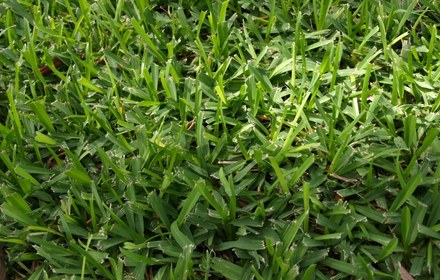
Amerishade exists for one reason: to grow grass where nothing else will. If you’ve got a deeply shaded zone under mature live oaks or between buildings where Raleigh and even Palmetto have thinned to bare dirt, Amerishade is the specialty grass built specifically for that problem.
Overview
This is not a general-purpose lawn grass — think of it as a targeted tool for ornamental shaded areas rather than a full-yard solution. It’s slower-growing and lower-traffic than the other St. Augustine varieties, but it can hold color and density in as little as 3 hours of direct sunlight per day, which is close to the minimum any warm-season grass can tolerate.
Growing Conditions in Central Texas
| Spec | Rating |
|---|---|
| Sunlight | 3 hours minimum |
| Drought tolerance | Low–Medium |
| Foot traffic | Low |
| Growth rate | Slow |
| Maintenance | Medium |
| Coverage per pallet | 450 sq ft |
Because it’s so shade-adapted, Amerishade actually has lower drought tolerance than sunnier St. Augustine varieties — deep shade means less evaporative stress, so it hasn’t been bred to fight drought the way Raleigh or Palmetto have. Keep it in the shaded zones it’s designed for; if you plant it in full sun expecting it to perform like Raleigh, it won’t.
Recommended Mowing Height & Frequency
Mow Amerishade at 3.5–4 inches, every 7–10 days. Keep it toward the taller end of that range consistently — in low light, taller blades mean more leaf surface for photosynthesis, which is the difference between Amerishade thriving and slowly thinning out. Never scalp it; St. Augustine has no rhizomes to regrow from a hard cut, and Amerishade has even less margin for error given its already-slow growth rate.
Watering Needs
Amerishade generally needs less water than sunnier St. Augustine varieties since shade reduces evaporation, but don’t let that lull you into neglect — shaded soil under tree canopy can also stay compacted and root competition from tree roots means the grass itself may need more frequent, lighter watering rather than less overall. Water early morning only; shaded, slow-drying grass is exactly the environment gray leaf spot and other fungal issues thrive in.
Fertilizing & MicroLife Recommendations
Go light on fertilizer — Amerishade’s slow growth rate means it doesn’t need or want the same feeding schedule as Raleigh. MicroLife Multi-Purpose 6-2-4 at a reduced rate every 8-10 weeks through summer is plenty. If it’s showing yellowing rather than its expected green, check for iron deficiency (common in Austin’s alkaline soil) and consider MicroLife Acidifier 6-2-4 — but also rule out simple overwatering or poor drainage first, since shaded zones are more prone to both.
Pros & Cons
Pros:
- The only real option for very deep shade (3 hours of sun or less)
- Solves ornamental shade problems other grasses can’t
Cons:
- Slow growth, slow to fill in or recover from damage
- Low foot traffic tolerance
- Not a full-yard solution — best used as a targeted shade zone product
Is Amerishade Right for You?
If you’ve got a specific shaded trouble spot — under a mature oak, between structures, a north-facing side yard — where you’ve already tried other St. Augustine and watched it fail, Amerishade is worth trying. If you’re grassing a whole yard, use it only in the deepest-shade sections and a more traditional variety everywhere else.
Get Amerishade St. Augustine Delivered in Austin
We deliver Amerishade throughout Greater Austin for those tough shaded spots. Call (936) 510-0964 or get a free quote and tell us about your shade situation — we’ll help you figure out if Amerishade is the right call.